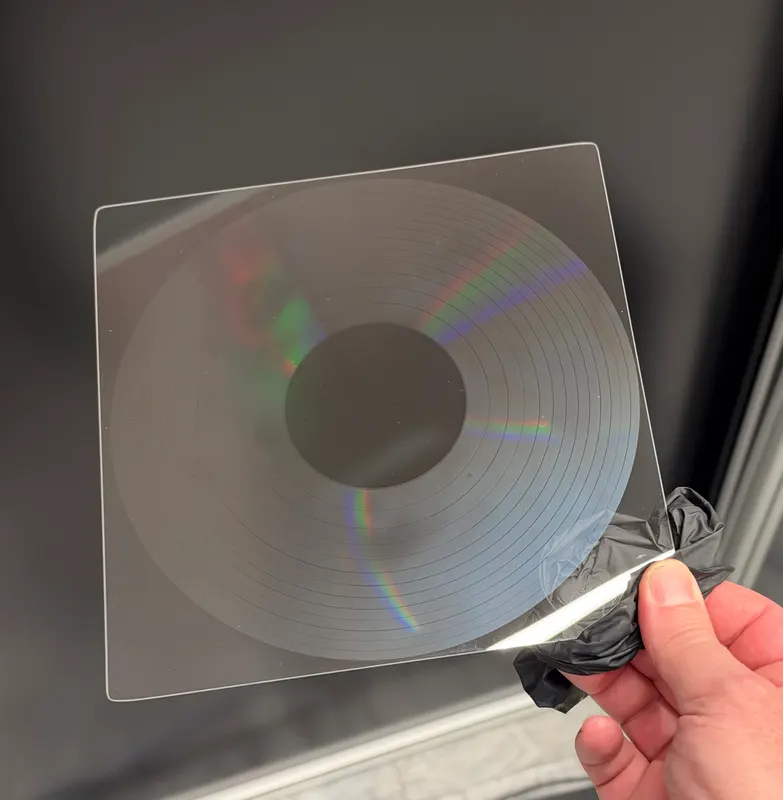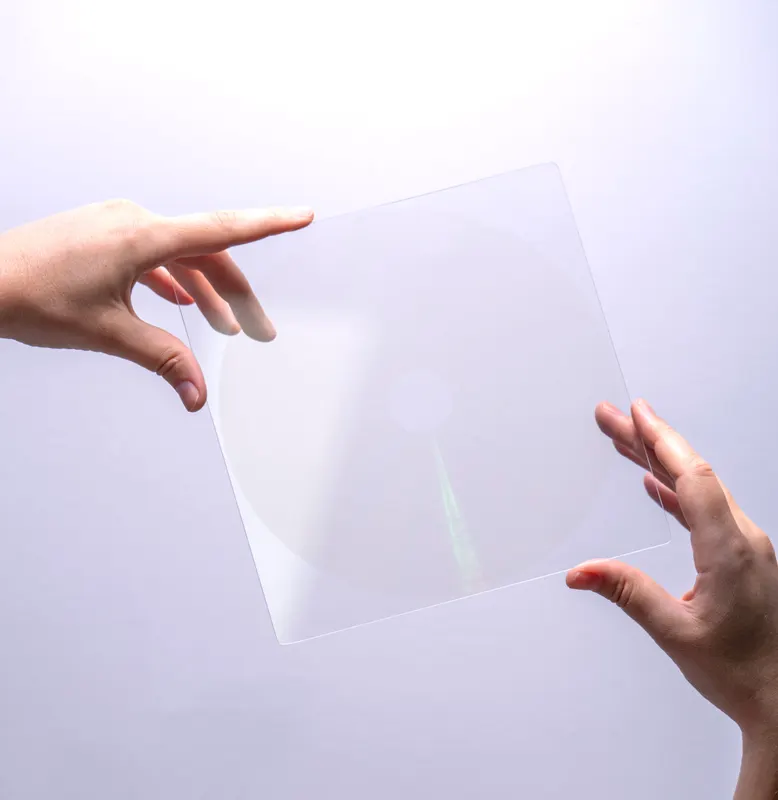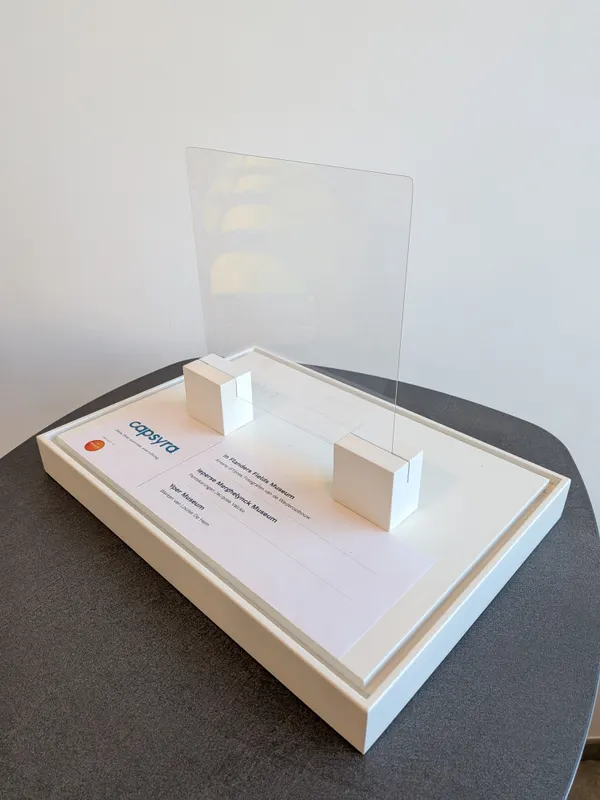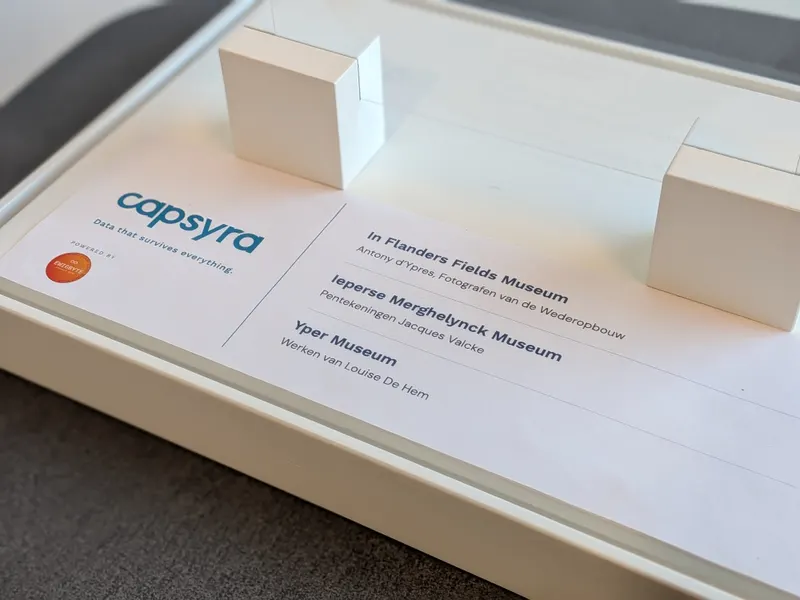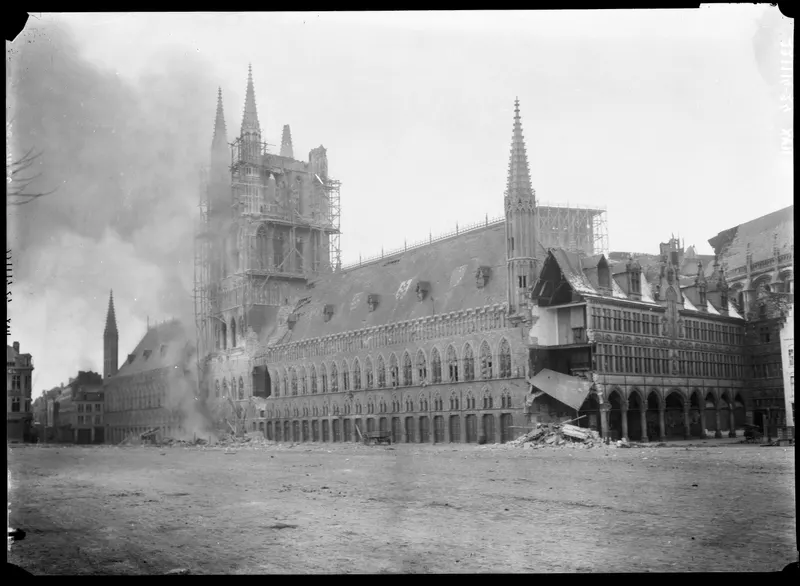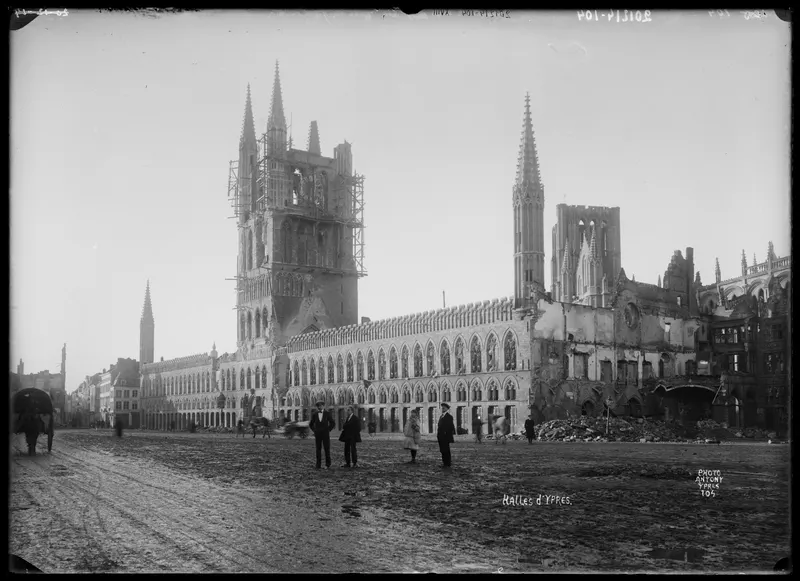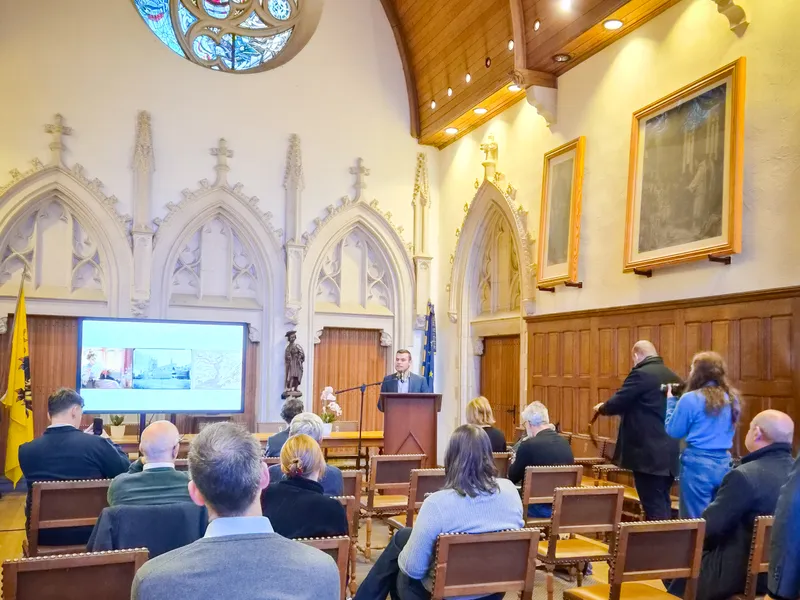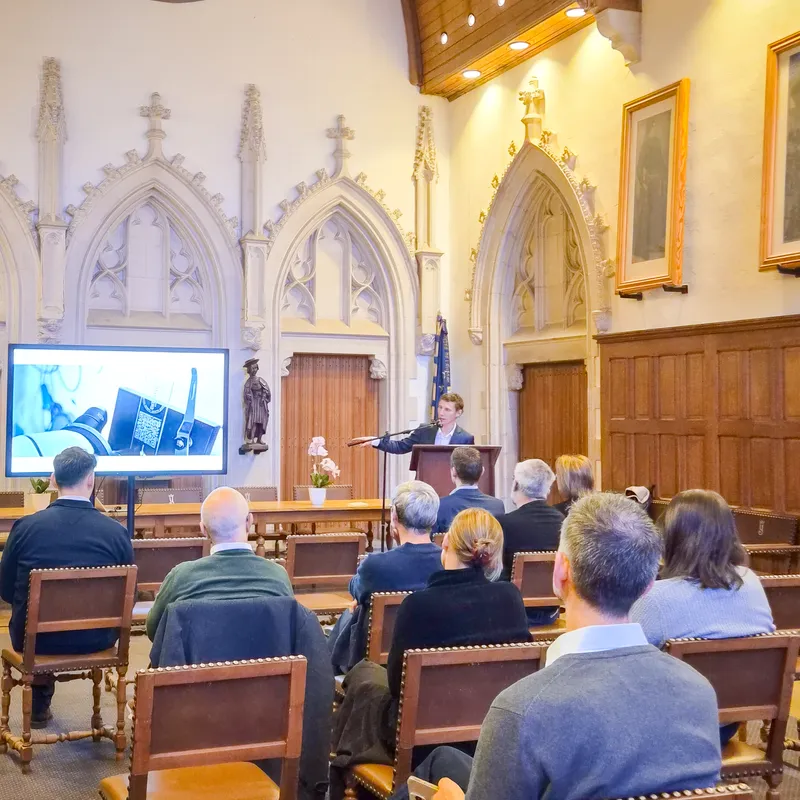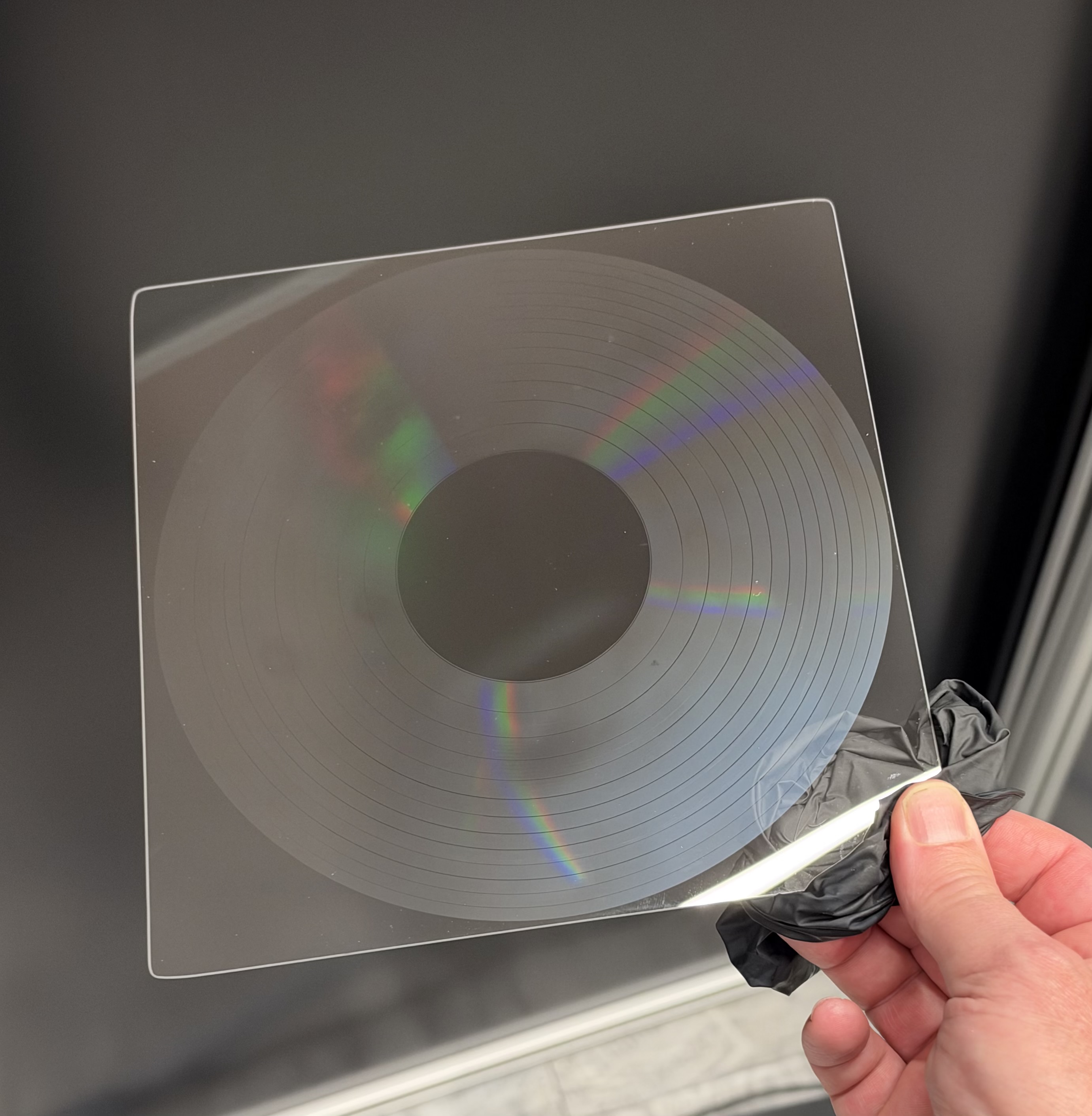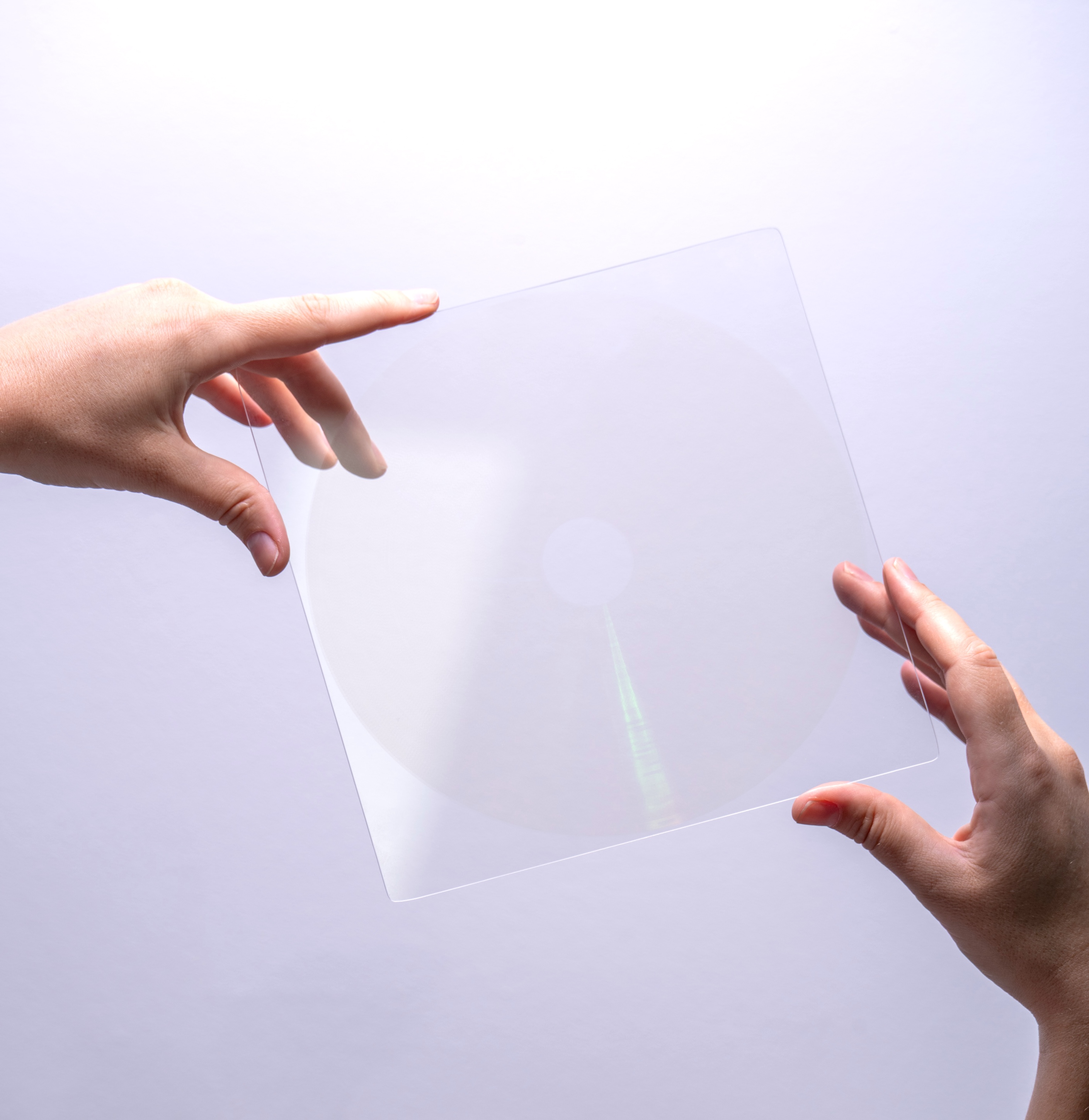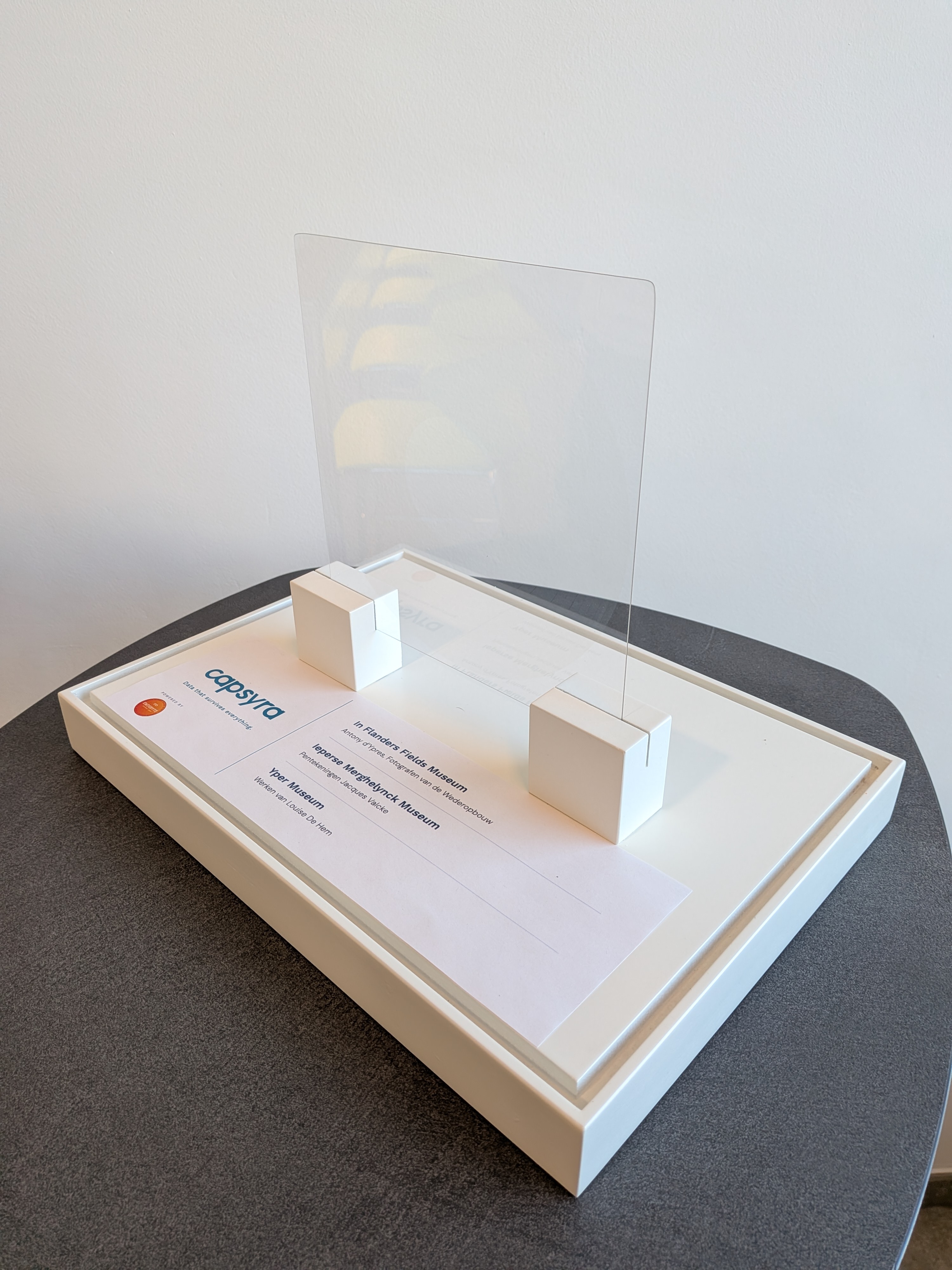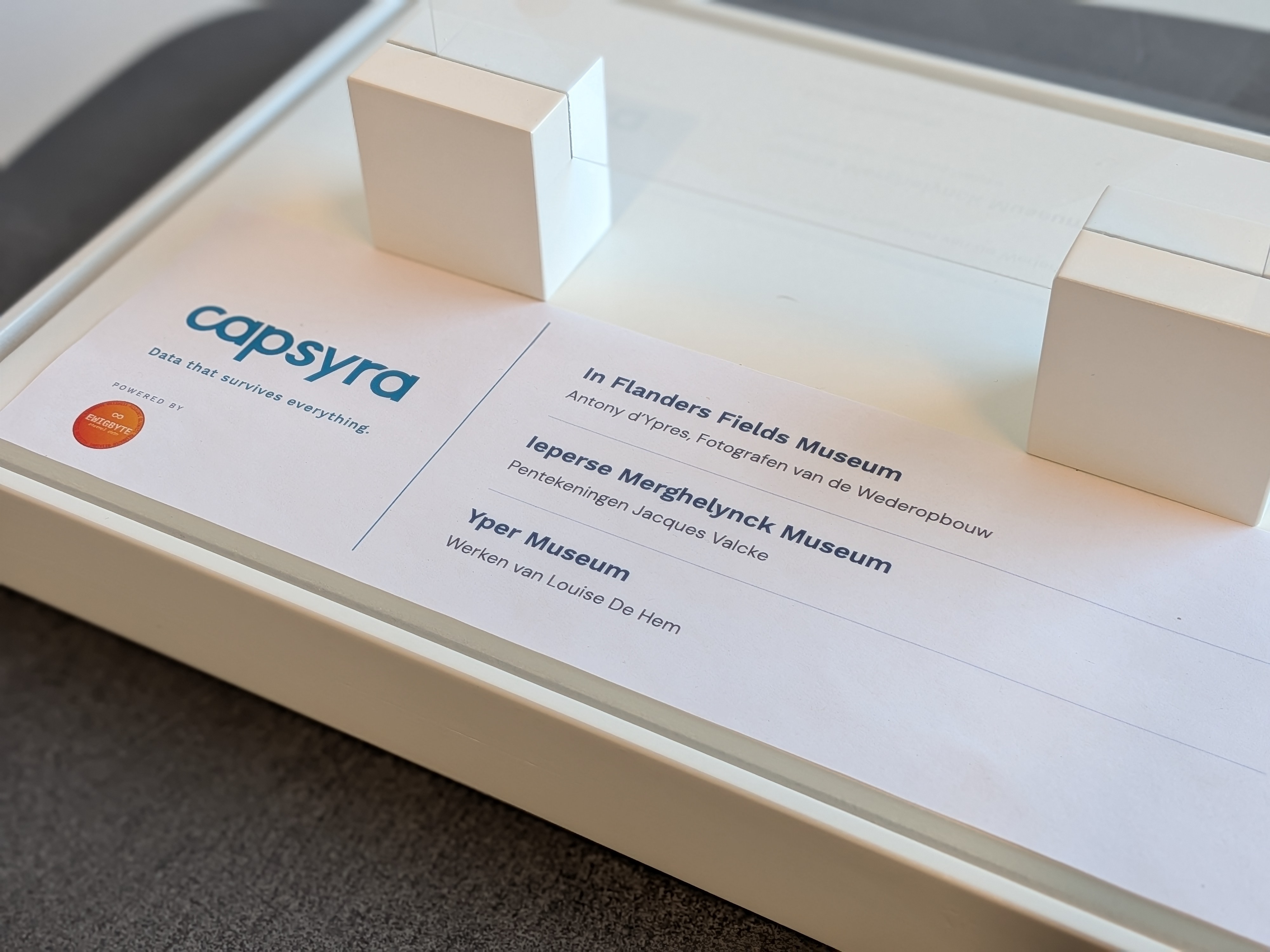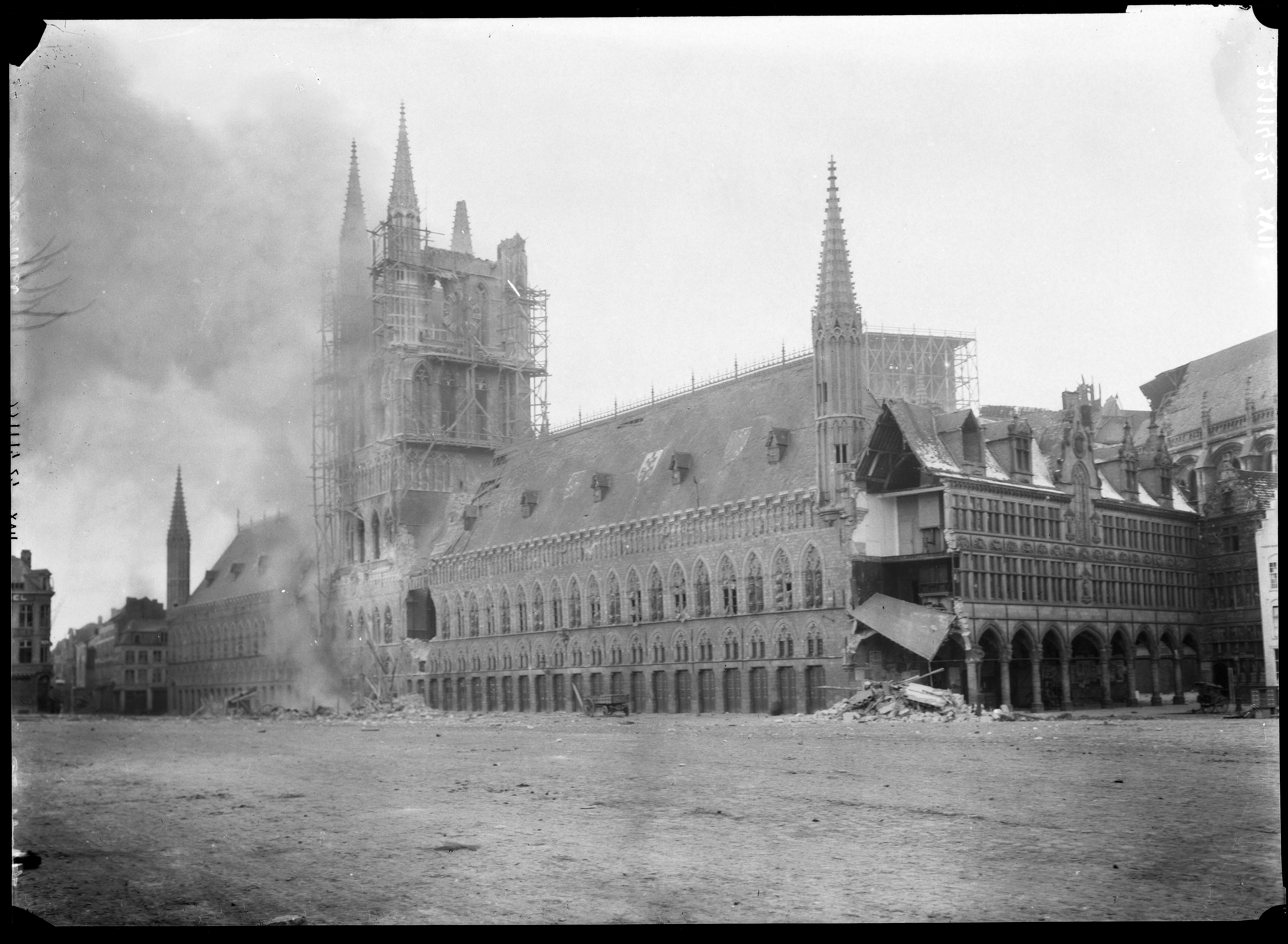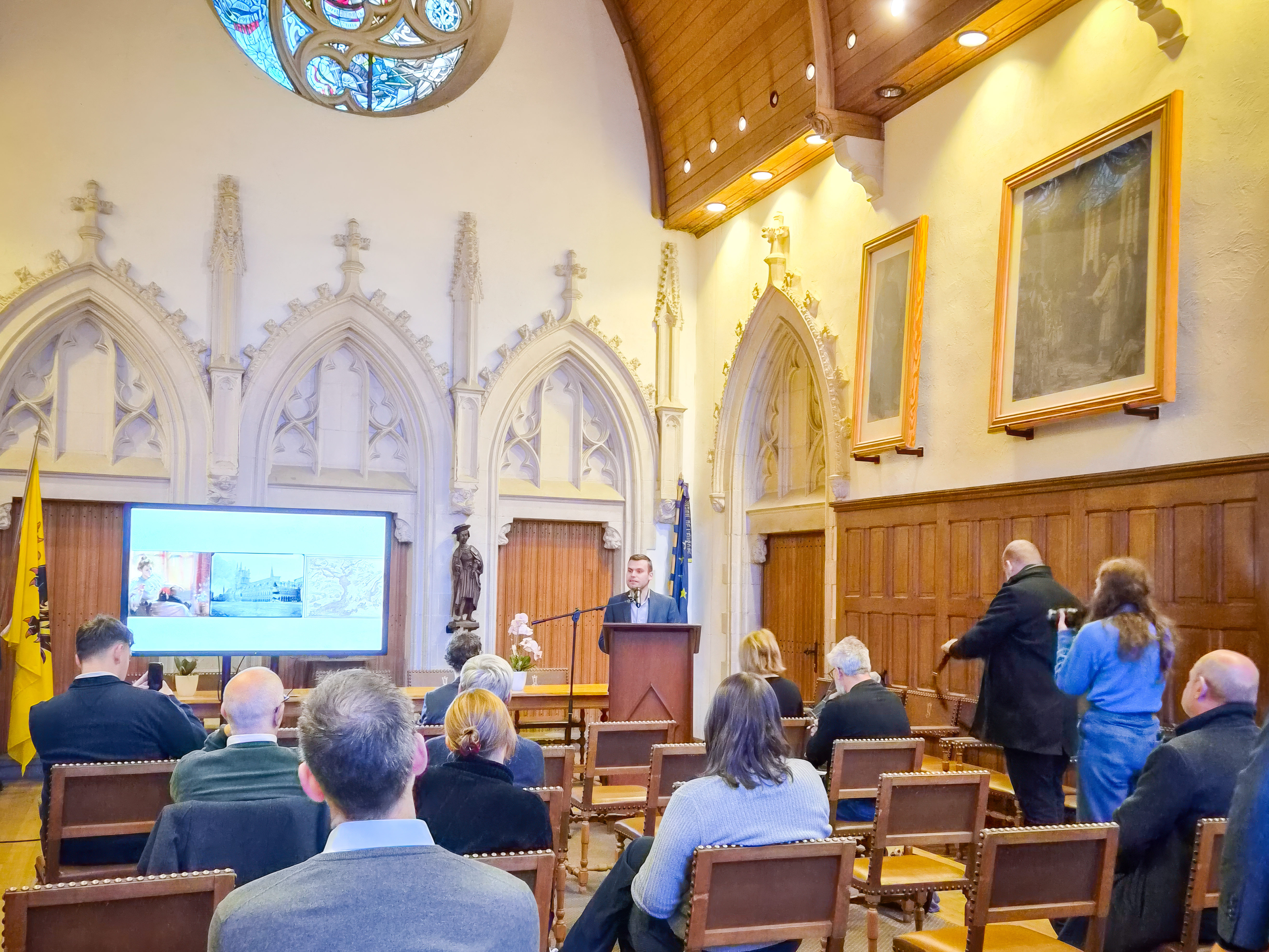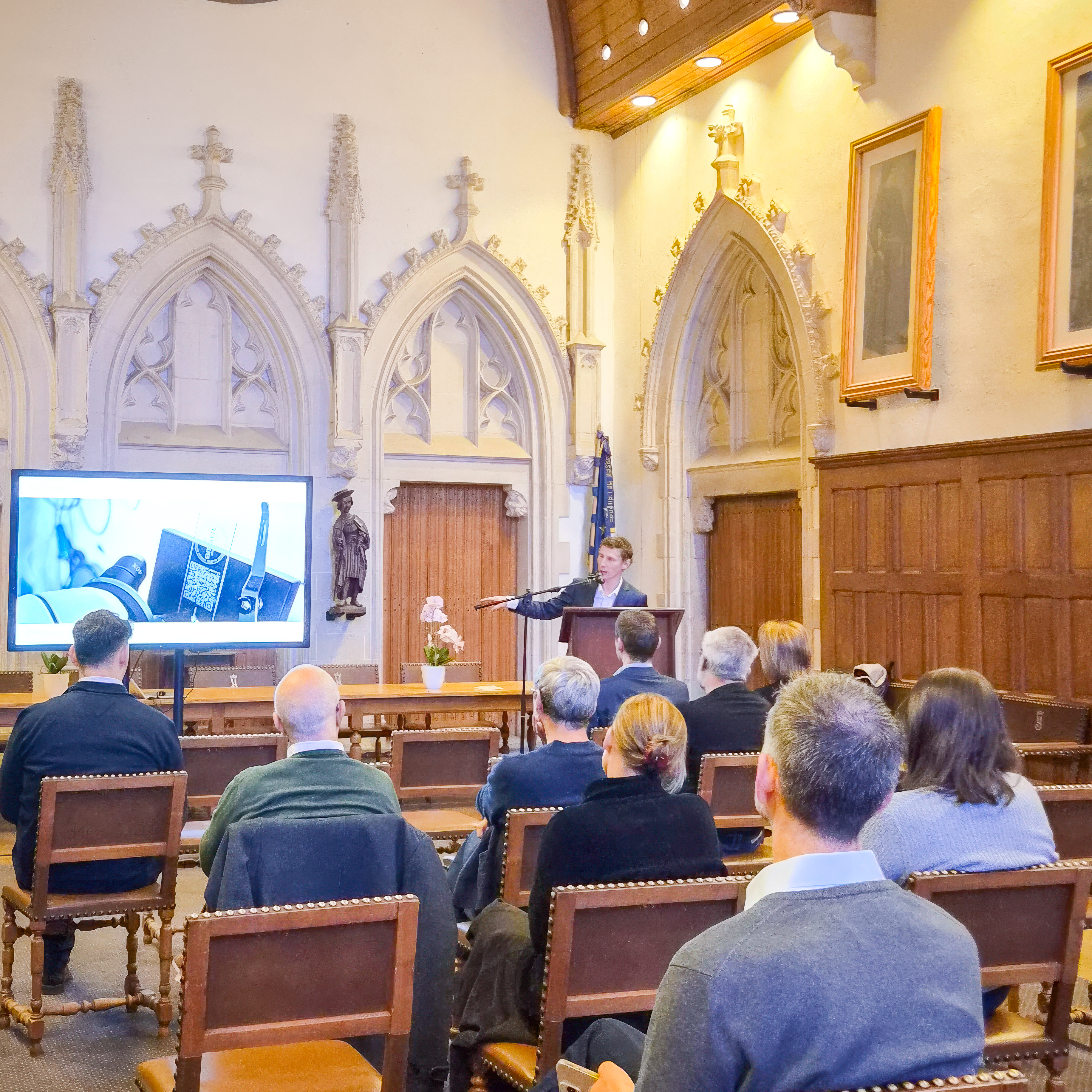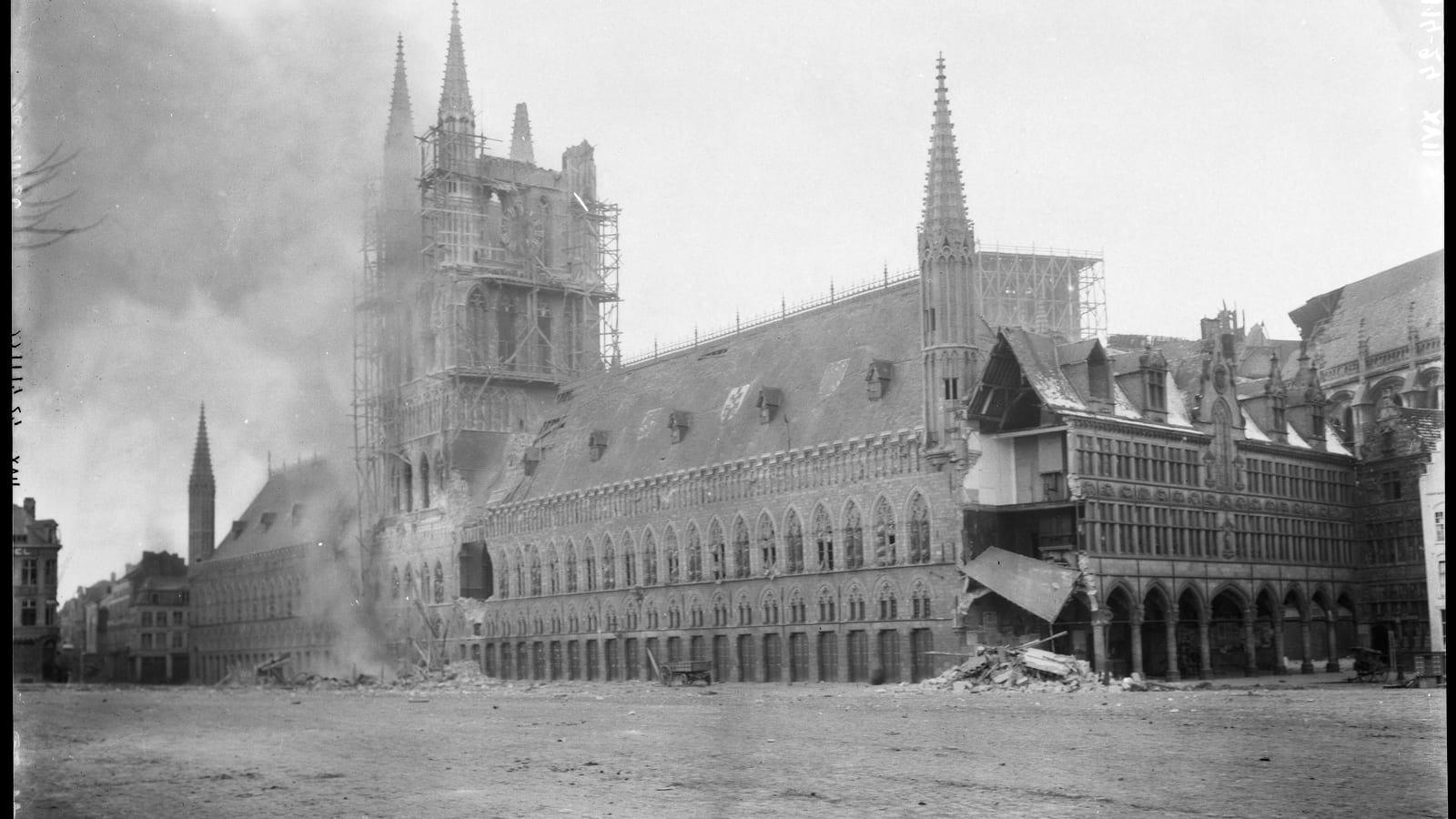
Ypres, Belgium, 24 November 2026 – In a pilot project, Capsyra is having digital reproductions of collections from the In Flanders Fields Museum, the Yper Museum and the Merghelynck Museum preserved on glass plates, including the iconic photograph of the burning Cloth Hall from 1914. The project was presented today in the council chamber of the Cloth Hall. Capsyra is funding the preservation for the first ten years.
Anyone can store digital data, but truly preserving it is a craft in its own right. Today, digital data preservation often depends on a single supplier, a subscription and technology that becomes outdated. Capsyra takes a different approach by determining in advance how long and where the data is stored, and how many copies are kept. The costs for the entire preservation period are also fixed in advance, so preservation does not depend on next year's budget. The data is held by several independent storage providers within Europe, and the encryption is updated in line with new standards. Every action is cryptographically logged, ensuring the data's integrity can always be verified. The system continuously monitors the integrity of the data and automatically takes action if something goes wrong.
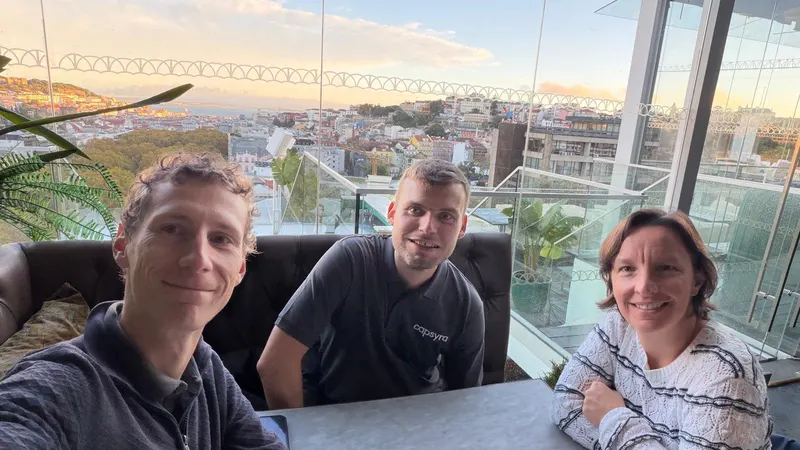
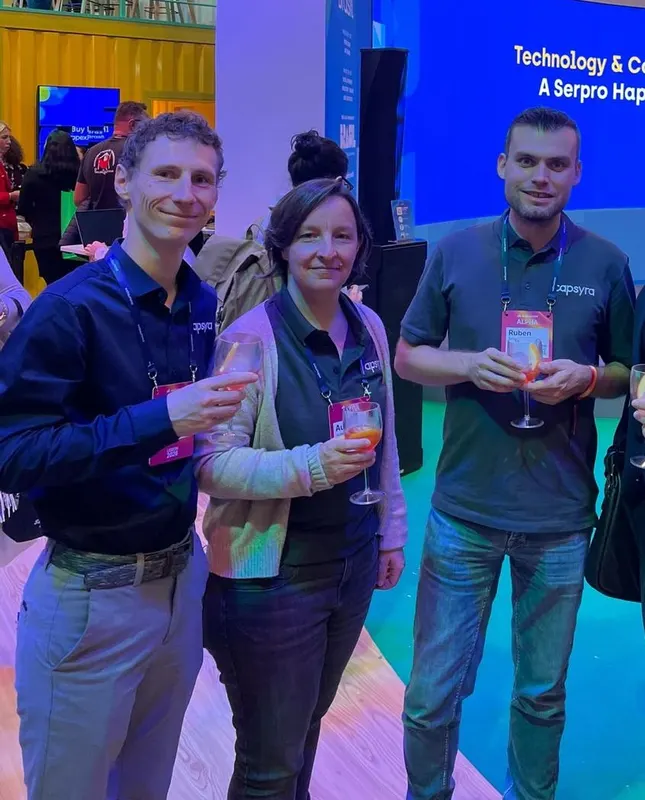
Like almost everyone, my father made no arrangements for his digital legacy. His photographs from the Second World War still exist because nobody threw that hard drive away. Pure luck. We are building Capsyra so that no one must rely on that kind of luck again.
Ruben Tacq, co-founder and CEO of CapsyraUntil now, Capsyra has stored data on European servers or on customers' own infrastructure. With this project, Capsyra is also using glass as a storage medium for the first time. Capsyra encrypts the data. Ewigbyte, a German deep-tech company, then writes it into the surface of a glass plate as microscopic structures, using ultrashort laser pulses; the data can later be read out optically. Ewigbyte wrote its first glass plates for institutions in November 2026 and is developing its writing and reading technology further for the preservation of data over centuries.
Clay tablets and parchment have carried knowledge for millennia. Most digital storage is built for years to decades and survives only through constant migration, energy and attention. A civilisation that records everything risks preserving very little.
Dr. Steffen Klewitz, co-founder and CEO of EwigbyteA glass plate contains no electronic components, consumes no power while stored, is not connected to a network and cannot be overwritten. This makes glass an energy-efficient and secure medium for data that, like a museum collection, must be preserved for future generations. After the first ten years, which Capsyra is funding, the museums can continue the preservation themselves. Once written, a glass plate needs nothing more than a safe place to be kept.
Ruben and I made a conscious choice to build Capsyra in Ypres. We are proud to be using this technology for the heritage of our own city. Ypres knows better than anyone what it costs to lose heritage. These collections should not depend on any company, not even Capsyra.
Bert Vinckier, co-founder and CCO of CapsyraWe cannot yet judge what value our data will have for people who live long after us. Preserving it for them is our responsibility.
Dr. Ina von Haeften, co-founder and CCO of EwigbyteThe Ypres museums' collections as a test case
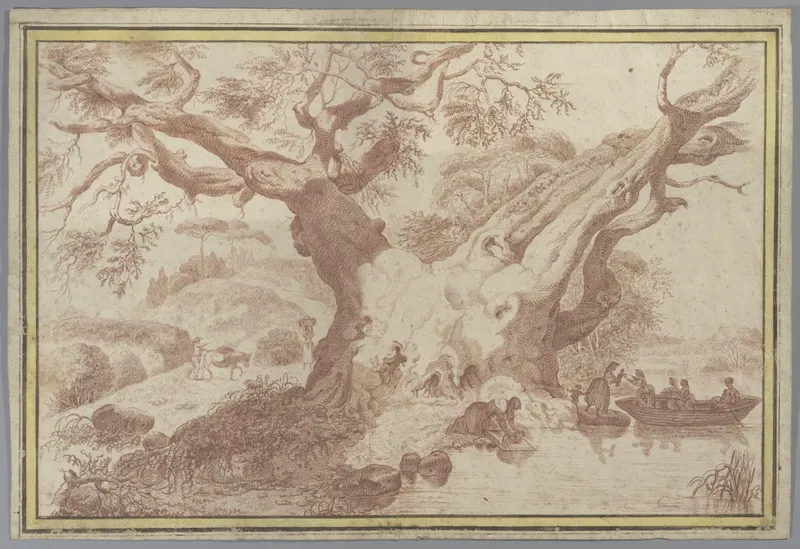
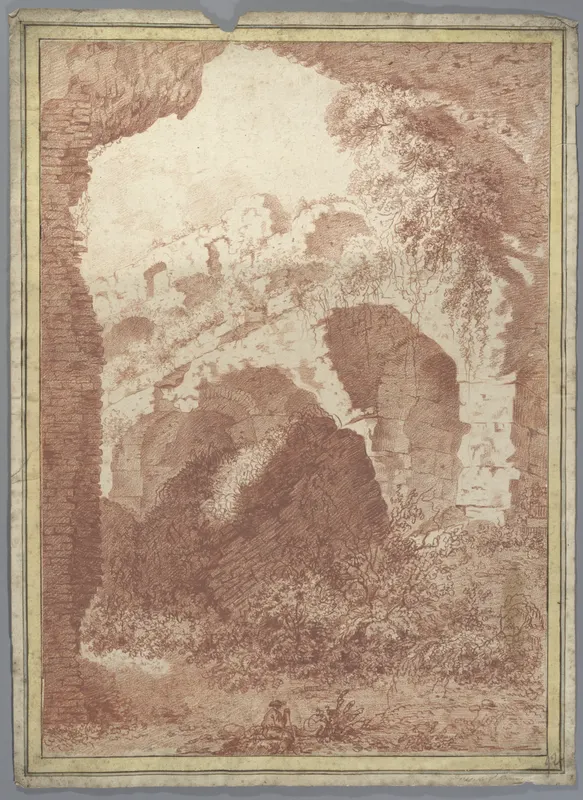
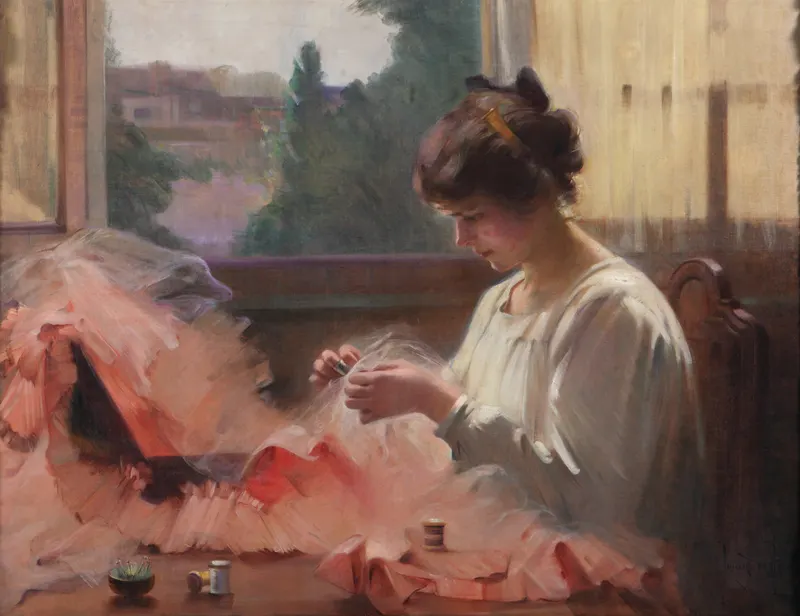
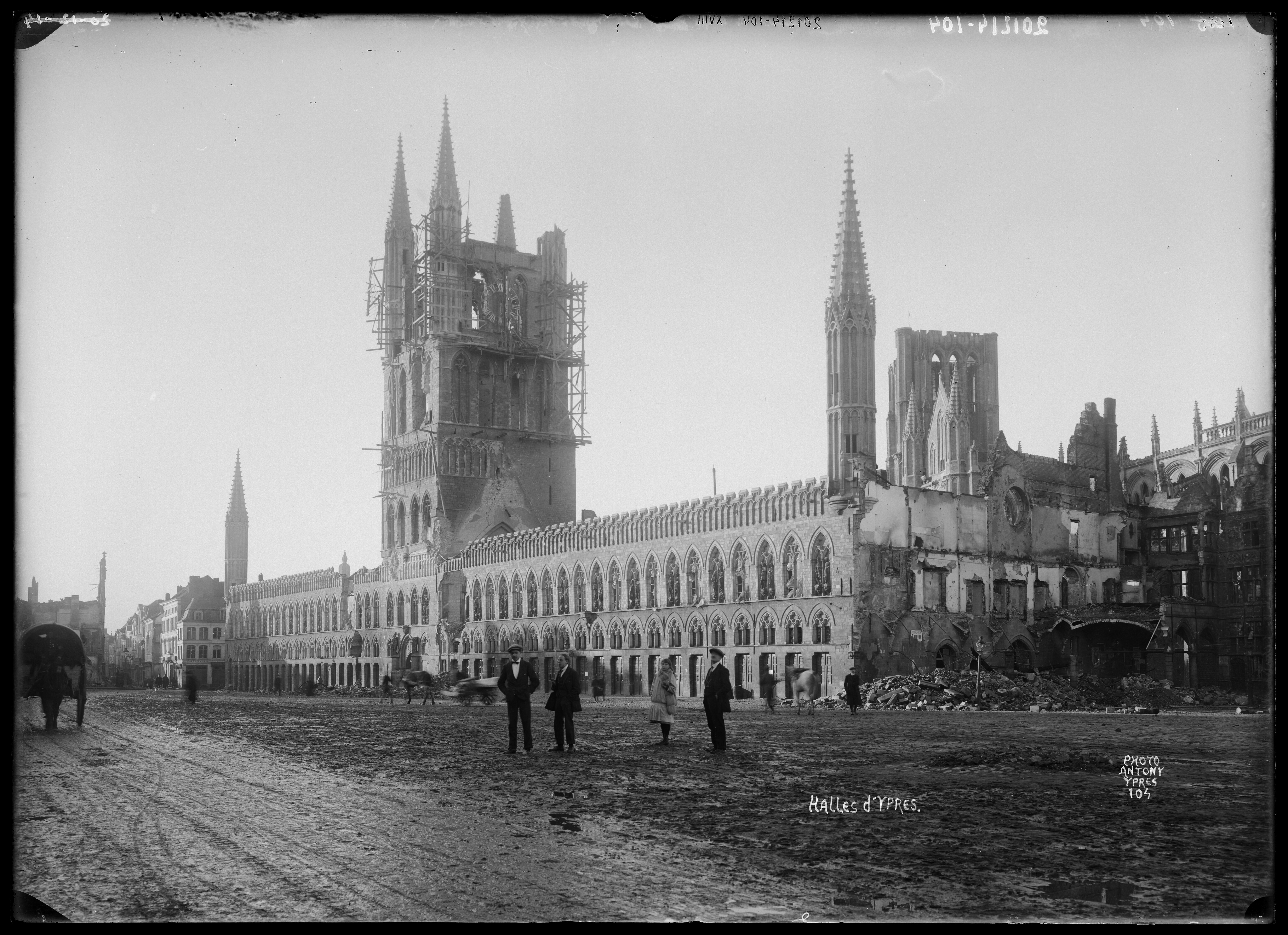
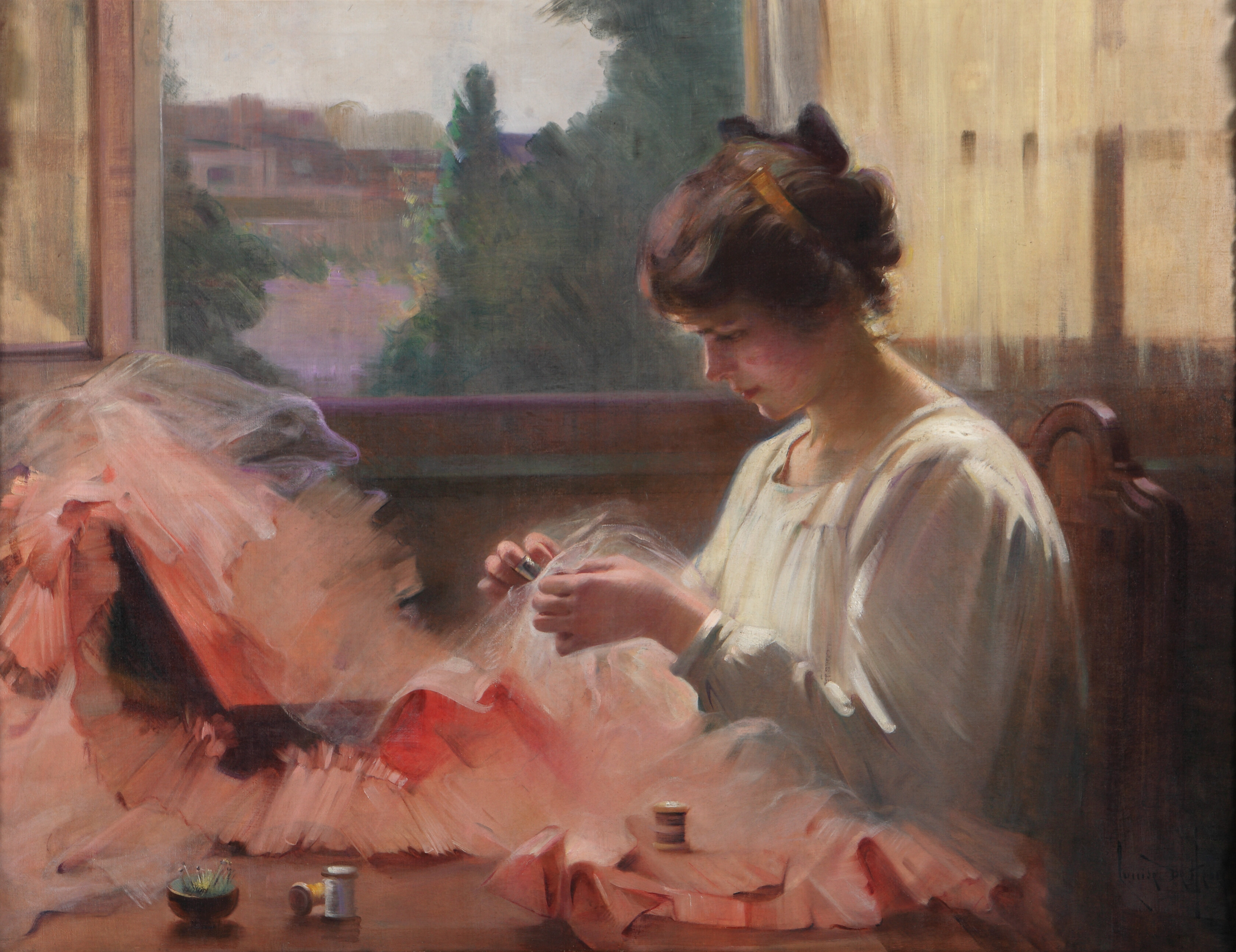
The In Flanders Fields Museum, the Yper Museum and the Merghelynck Museum manage a rich heritage collection that preserves the story of Ypres and its history for future generations. For this test case, the museums made digital reproductions of notable collections available. These include the Antony d'Ypres photo collection and a series of 18th-century drawings, both recognised as Flemish cultural heritage masterpieces, as well as the collection of Ypres painter Louise De Hem.
Museums primarily preserve physical heritage objects. To protect them and make them accessible for research and display, the Ypres museums have been investing in professional digitisation for years. However, digital files also require a sustainable preservation strategy. With this test case, the museums are exploring how new storage technologies can preserve their digitised collections over the long term. The physical originals and the original digital files will, of course, be retained.
The long-term preservation of heritage is a core task of our museums. That is why we are happy to support innovative initiatives that explore new possibilities for the long-term preservation of digitised collections. The fact that Capsyra, winner of the Ieper Award Start-up of the Year, is setting up this test case together with the Ypres museums makes this project even more special.
Emmily Talpe, alderwoman for museums of YpresOne of the digital images being immortalised on glass is the iconic photograph of the burning Cloth Hall, taken by Robert Antony. On 22 November 1914, the historic city centre of Ypres was heavily shelled, and fire broke out in several places, including the Cloth Hall, where the city archives were also kept. Antony's photographs are now among the most iconic records of the destruction of Ypres during the First World War.
For museums, the long-term preservation of collections is a core task. That is why the Ypres museums are following this technological development with great interest and are keen to explore the new opportunities this approach offers for the long-term preservation of heritage.
Margot Melsens, curator at the Ypres museumsAbout Capsyra, the Ypres museums and Ewigbyte
About Capsyra
Capsyra is a Belgian tech company based in Ypres, founded in 2025. It helps organisations preserve, verify and keep control of their most critical data for decades, independent of providers, funding and technology. Its target sectors include museums, notarial offices, law firms, companies with archiving obligations and manufacturers that manage a Digital Product Passport. More information at www.capsyra.com.
About the Ypres museums
The Yper Museum tells the story of eleven centuries of Ypres through archaeological objects, insignia, art and contemporary curiosities, with a special focus on the city's medieval golden age.
The In Flanders Fields Museum presents and preserves the history of the First World War in Belgium, with particular attention to the West Flanders front region. Both museums are housed in the Cloth Hall.
The Merghelynck Museum is the only museum in Flanders devoted entirely to the 18th century. The house museum, with its salons, mirror rooms and boudoirs full of porcelain and art, offers a glimpse into the rich history of the Merghelynck family.
About Ewigbyte
Ewigbyte GmbH is a German deep-tech company based in Munich. It develops storage technology and services for the long-term preservation of digital information on glass. Its development was supported by a validation contract from SPRIND, Germany's Federal Agency for Disruptive Innovation, and Ewigbyte is part of the ESA BIC programme. More information at www.ewigbyte.com.
Media contacts
Note to editors
High-resolution photos and videos can be downloaded from the press kit at the bottom of this page.